I’ve always been pretty entrepreneurial. Back in high school, I convinced my parents to buy a CD writer, then I’d go to Video Ezy (remember those), borrow PlayStation games, and copy them for my friends as “backups.” Hey—a kid’s gotta make lunch money, and statute of limitations, right?
But my first real foray into startups was the early 2010s. I was working in media, social media was exploding, and mobile apps were hitting that boom phase—the “there’s an app for that” era. I had a workmate who was also keen to do his own thing, and through a combination of naivety and entrepreneurial hunger, we thought: why not give something a go?
At the time, with the social boom, mobile growth, and 3G, it felt like people were becoming more and more connected… but not actually connecting. Sounds wanky written down, but honestly—looking at today, it’s probably worse than ever.
That was the seed for my first startup: MyShout.

The idea
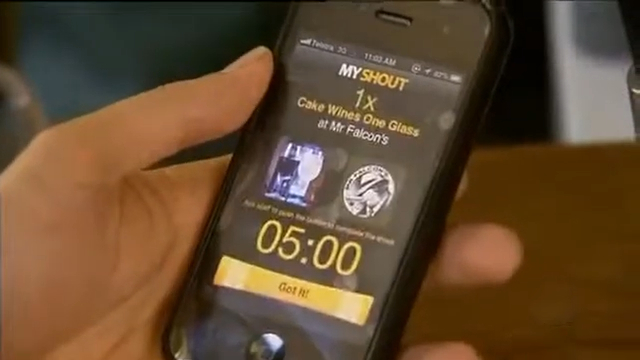
The idea was simple: you “shout” your mate a real drink and connect in the real world.
It looks pretty janky and dated now, but back then it felt like cutting-edge design. We found a dev team in Ukraine on oDesk (now Upwork) and contracted them to build iOS and Android. That was basically all the money we had.
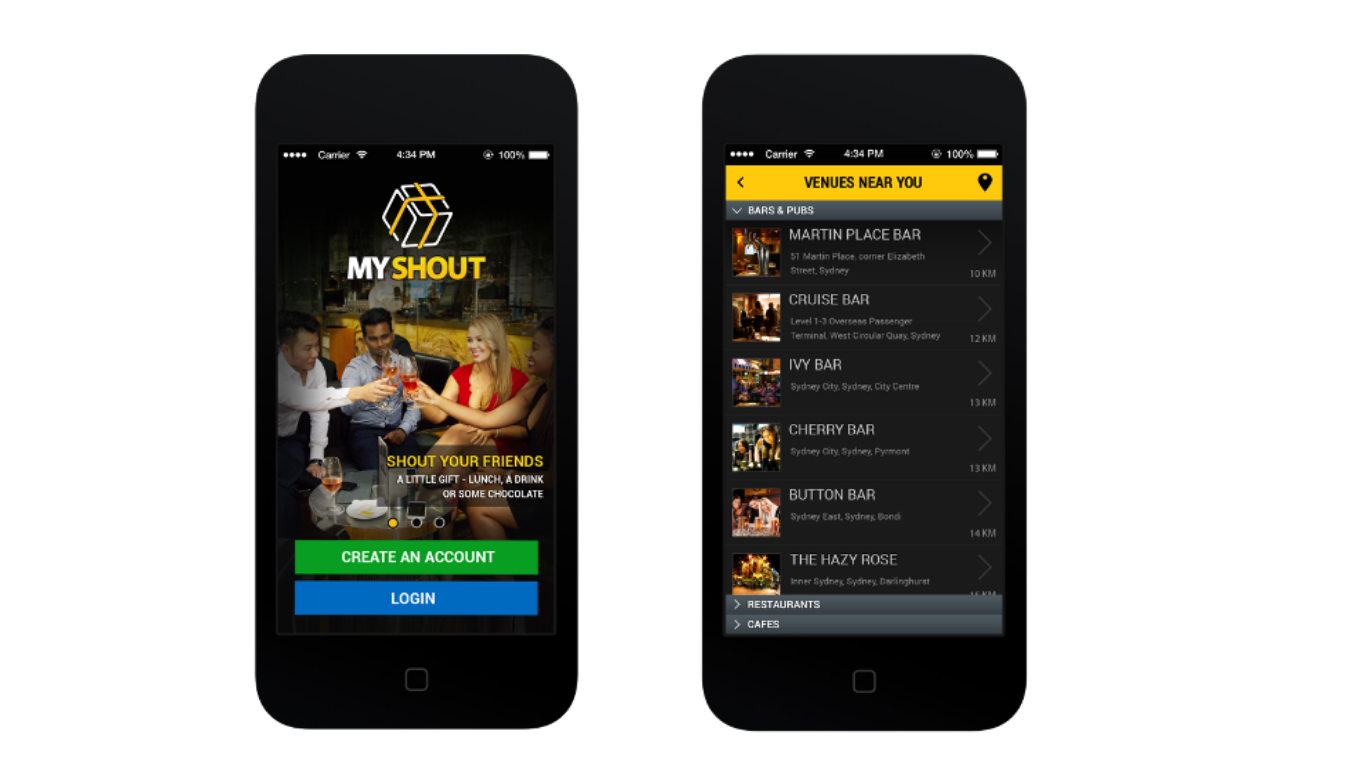
If I could do it again, I’d probably just learn to code.
Early traction (and the press trap)
We weren’t doing too badly early on. After work we’d go bar-to-bar, signing venues up to pilot the platform. All they had to do was accept the vouchers our users generated, and let us remit the money from transactions.
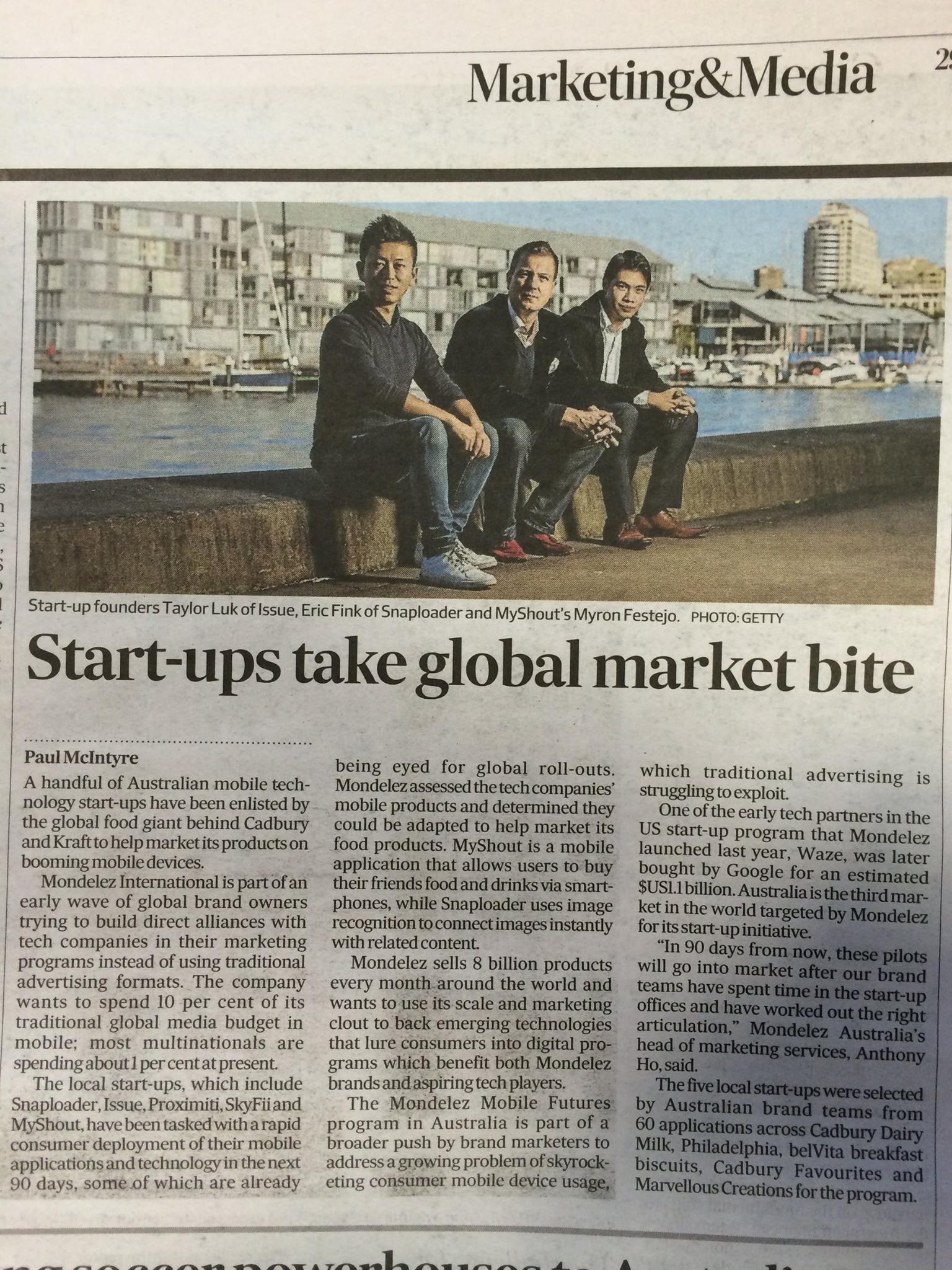
It was low friction and uptake was decent—we hit around 10–15 bars pretty quickly. We also managed to get into 10 News, MX, and other local media.
It was my first time on TV and I must admit, the attention felt good. But you learn pretty fast that press coverage doesn’t equal success—even if everyone around you thinks it does.
The model reality check
It was always going to be a tough model. Marketplaces are hard enough, but when you’re bootstrapping and hustling, you can only get so far.
Knowing what I know now, if we really wanted a marketplace model to work, we probably should’ve pushed harder for larger funding. Even so, we got a couple thousand users, and people were willing to try it.
The issue was repeat usage. With only a handful of pilot venues, usage was constrained—and people would try it once, then drop off. We learned quickly that people are tight asses at the end of the day and are only willing to shout their mates so often.
We took a 15% clip on each transaction, which is actually pretty solid, but we needed significant volume for it to matter.
The pivot (and the “this has legs” moment)
That’s when we started realising repeat transactions were everything. So we pivoted towards more of a venue-focused platform—a mix of B2B and B2B2C.
We started building features for venues: digital menus, specials, promos—anything that could get people coming in more often. We also began exploring staff rewards: companies rewarding their employees with food and drink at local venues.
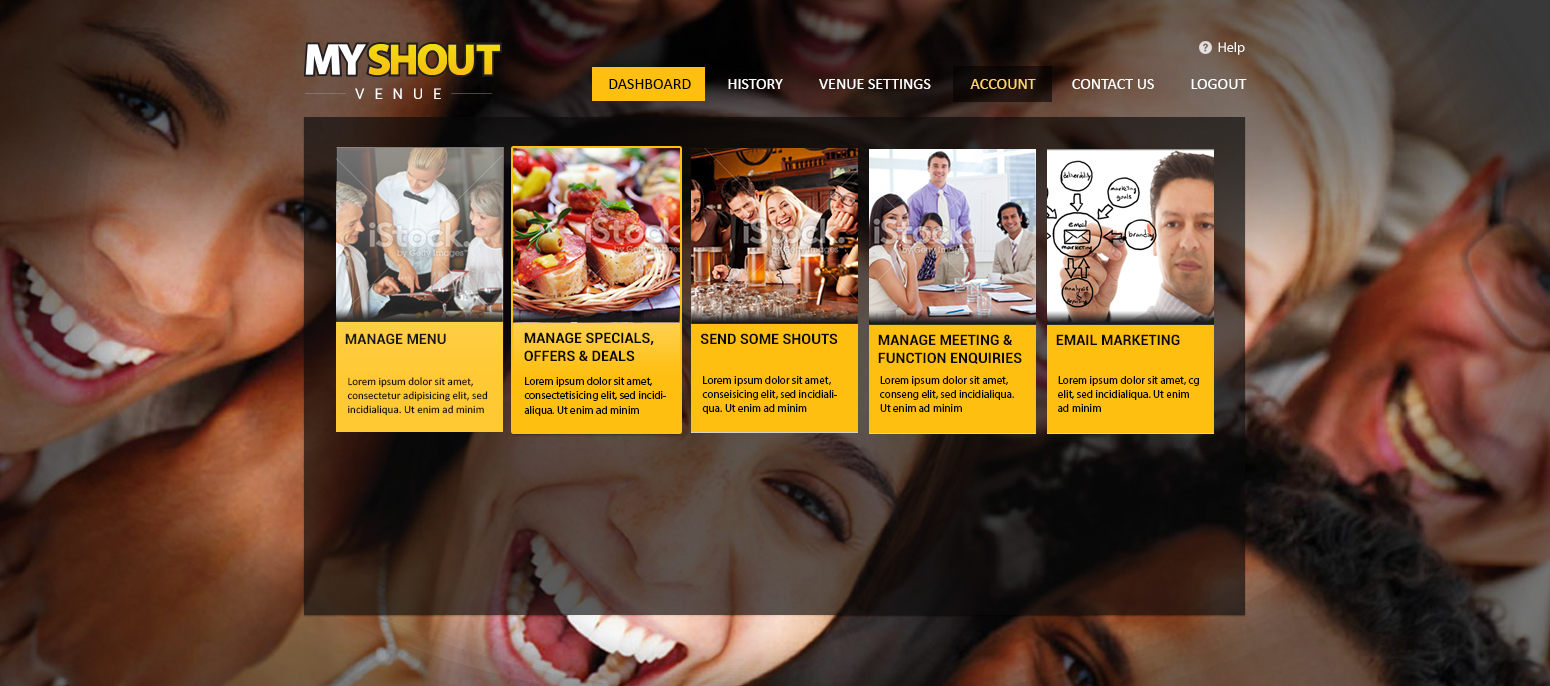
In hindsight, I’m a little sad we didn’t double down harder here, because it genuinely felt like it had legs. You rarely saw digital menus back then, and then during COVID they absolutely boomed—now they’re mainstream in cafés, bars, and restaurants.
But anyway.
The big win (Cadbury)
Our first major win came through Marvelous Creations and Cadbury.
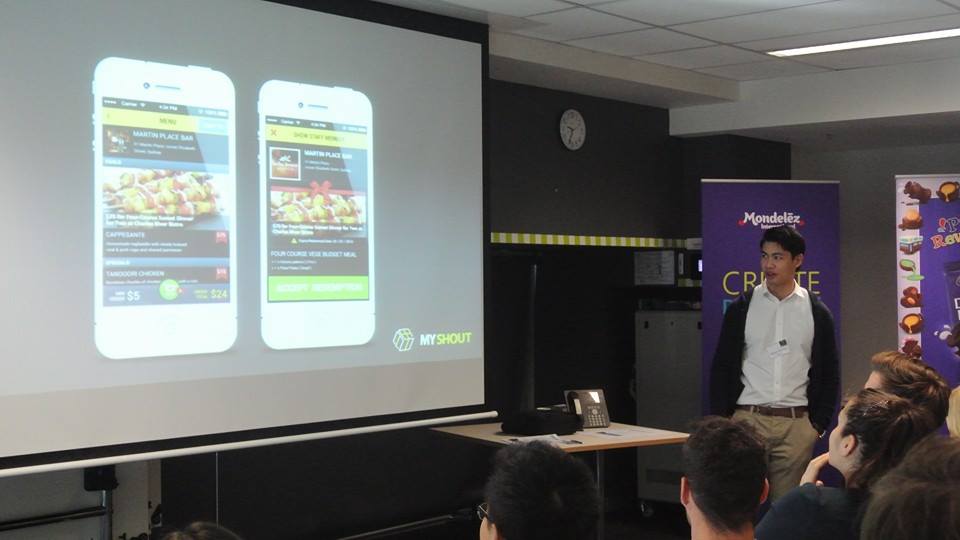
Mondelez (who own Cadbury) were running a mobile-focused competition. I applied and pitched the idea of doing sampling through our platform—getting them to “chuck vouchers” into the app for users to redeem.
Sampling is a huge part of the FMCG playbook, so it made sense. And honestly, it was awesome to get a big chunk of money in.
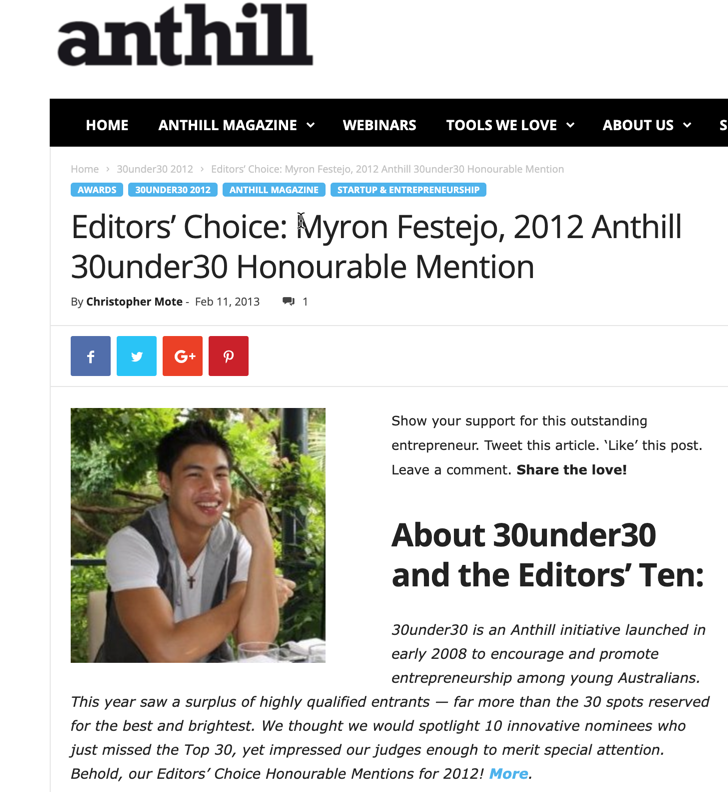
We also got more press (AFR, BRW), an Anthill 30 Under 30 nomination / honourable mention, and I brought on an angel investor. I started building a small dev and marketing team in the Philippines, which helped get costs down and stretch runway.
The hard thing about hard things (cofounder fallout)
It wasn’t all sunshine and roses. One of the biggest challenges of my life was falling out with my cofounder.
I don’t think we were aligned, and maybe the grind was too much. After talking it through with a mentor and the investor, we made the call to ask him to leave.
I knew he wanted out too, but it’s funny how these things never go how you hope. The hard thing about hard things is they’re hard. (I recommend reading The Hard Thing About Hard Things by Andreessen Horowitz cofounder Ben Horowitz for more on this subject.)
We eventually reached an agreement after a lot of back-and-forth (and some lawyers). I’ve got full respect for him to this day, but I’m still a bit sad we never recovered the friendship.
It’s one of those lessons you only learn once: maybe you shouldn’t be in business with friends.
Execution meets reality (7‑Eleven)
The platform was improving and looking much better. We rebranded more towards gifting and were well into executing the Cadbury campaign.
We decided to try to handle distribution through 7‑Eleven, and we were working towards a partnership. With Cadbury involved, there was real willingness to make it work—it would drive foot traffic for them too.
Then we hit a brutal blocker: at the time, the registers’ infrared scanners couldn’t reliably read barcodes from phone screens. So we could deliver vouchers digitally… but people couldn’t redeem them.
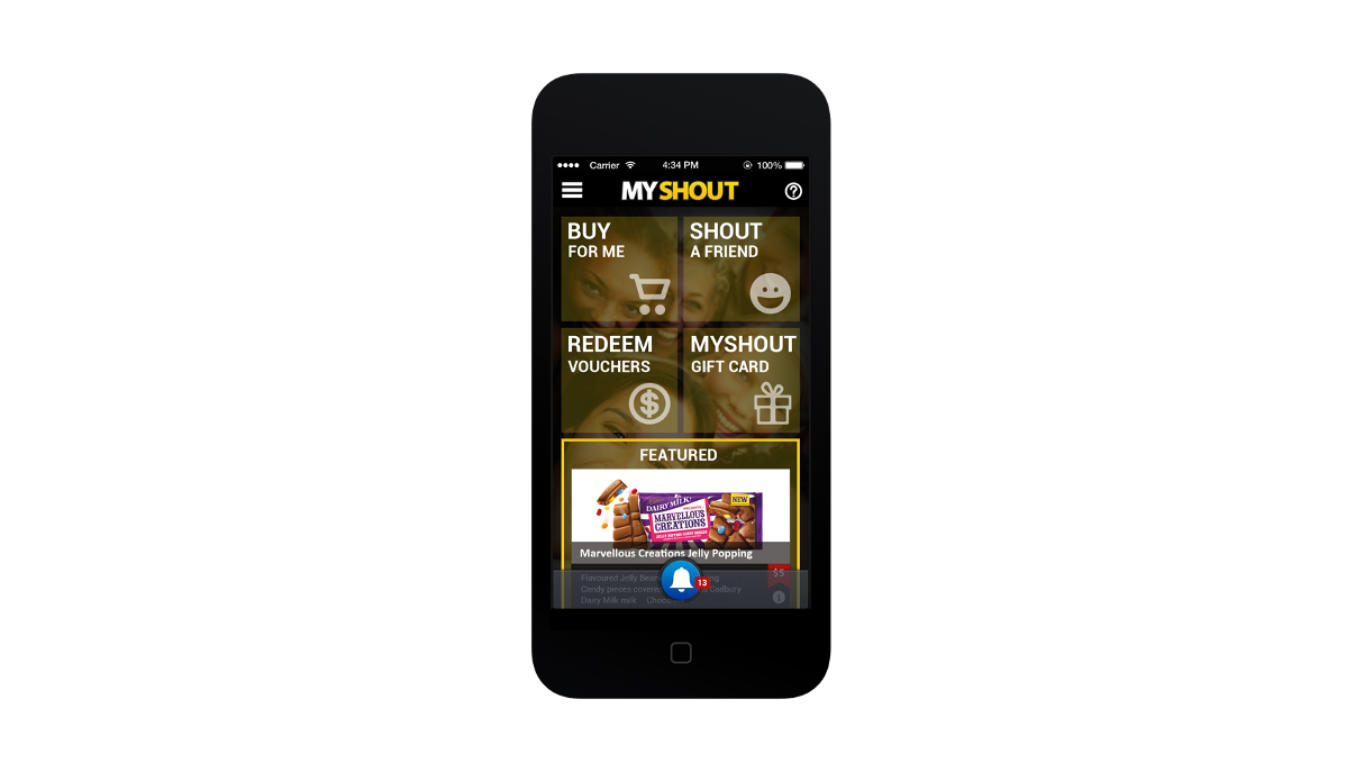
Instead, we ran a smaller campaign in the Sydney CBD: we left boxes of Cadbury chocolates at a few of our venues, and people could pick them up by showing a voucher. Low risk for venues, extra foot traffic for them, and it still “worked”… but it wasn’t the scalable version we needed.
The decision
Looking back, it’s wild to see how normal this all is now: digital menus, QR ordering, digital vouchers redeemed at POS. These were all directions we could see—and we were circling them early.
But I had to make a call.
I’d been working on this for about 3–4 years and wasn’t really making money—just pulling out what I needed to survive. I had a solid Philippines team and we’d just received a chunk of cash from Cadbury… but I wanted something more reliable around cash flow.
So I did what you do when you need to make money and you’re out of runway and ideas: I started a digital agency and software development studio, which became Leet Digital.
The actual lessons (so I don’t pretend this was “just a journey”)
- Press feels amazing, but it’s not the same thing as success.
- Marketplaces are brutal when you’re bootstrapped.
- I’d rather be in the repeat order business than the one-off.
- Deals aren’t done ’til they’re done. Partnerships can look promising, until one tiny technical constraint nukes the whole plan.
- Cofounder misalignment is expensive, emotionally and financially—and “friends” doesn’t change that. In fact, it probably makes it worse.
- I will not just get a million users super fast because an idea is cool, then sell to Google for a billion dollars, then go buy a Ferrari. Solve real problems—problems people feel acutely.